Magnetic Properties
What are Magnetic Properties of Solids?
Every substance around us has some magnetic properties in it. Different types of materials show different properties in the presence of a magnetic field. The magnetic properties of a substance originate from the electrons present in the atoms or molecules. Every electron in an atom behaves like a small magnet. Electrons can also be referred to as small loops of current which retain their magnetic moment.
Graphs showing the variation of magnetic properties on changing temperature: In paramagnetic material, with the increase in the magnetic field, the magnetization of the material increases. When the material is heated the magnetization starts decreasing, so the magnetization of the material is inversely proportional to temperature. This relationship is known as Curie’s law.
M = C×(B/T)
Where, M = magnetization of the material
C= Curie’s constant
B= applied magnetic field
T= Temperature
Frequently Asked Questions – FAQs
Q1 What are magnetic properties?
Anything that is magnetic has a magnetic moment, like a bar magnet or a coil of electric current. A magnetic moment, with a magnitude and a direction, is a vector quantity. An electron has a magnetic dipole moment of an electron, created by the intrinsic spin property of the electron, making it an electric charge in motion.
Q2 How many types of magnetic properties are there?
Diamagnetism and paramagnetism, which account for the bulk of the periodic table of elements at room temperature, are the two most common forms of magnetism. These elements are commonly referred to as non-magnetic, whereas ferromagnetic elements are actually known as those referred to as magnetic.
Q3 What is a magnetic material?
Magnetic materials are materials that are researched and primarily used for their magnetic characteristics. A material’s magnetic reaction is largely determined by the magnetic dipole moment associated with the electrons’ intrinsic angular momentum, or spin.
Q4 What are the features of a permanent magnet?
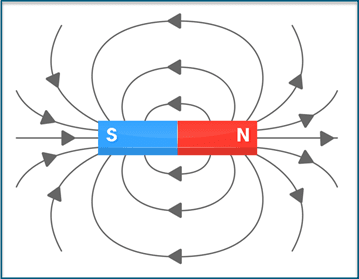
Permanent magnets are magnetic, and they are all aligned in the same direction with the electrons in their atoms. Their three-dimensional magnetic field lines begin at the north end and loop around the south end. The power of the magnets depends on the object that comes into contact with the magnet.
Q5 What is magnetic Behaviour?
Paramagnetism, diamagnetism, and ferromagnetism have many magnetic behaviours. Their tendency to form magnets is an interesting feature of transition metals. Metal complexes that have electrons unpaired are magnetic. The paramagnetic impacts are boosted by more unpaired electrons.