Electronic configuration of atoms
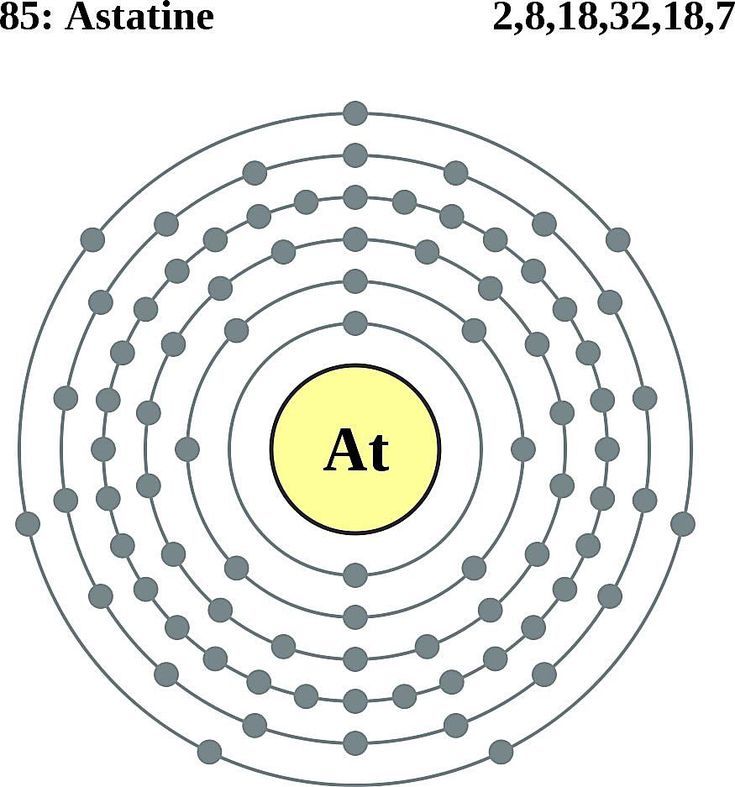
Electronic configuration of atoms
The electron configuration of an element describes how electrons are distributed in its atomic orbitals. Electron configurations of atoms follow a standard notation in which all electron-containing atomic subshells (with the number of electrons they hold written in superscript) are placed in a sequence. For example, the electron configuration of sodium is 1s22s22p63s1.
However, the standard notation often yields lengthy electron configurations (especially for elements having a relatively large atomic number). In such cases, an abbreviated or condensed notation may be used instead of the standard notation. In the abbreviated notation, the sequence of completely filled subshells that correspond to the electronic configuration of a noble gas is replaced with the symbol of that noble gas in square brackets. Therefore, the abbreviated electron configuration of sodium is [Ne]3s1 (the electron configuration of neon is 1s22s22p6, which can be abbreviated to [He]2s22p6).
Electron Configurations are useful for:
Determining the valency of an element. Predicting the properties of a group of elements (elements with similar electron configurations tend to exhibit similar properties). Interpreting atomic spectra. This notation for the distribution of electrons in the atomic orbitals of atoms came into practice shortly after the Bohr model of the atom was presented by Ernest Rutherford and Niels Bohr in the year 1913.
Writing Electron Configurations
Shells
The maximum number of electrons that can be accommodated in a shell is based on the principal quantum number (n). It is represented by the formula 2n2, where ‘n’ is the shell number. The shells, values of n, and the total number of electrons that can be accommodated are tabulated below.
Subshells
The subshells into which electrons are distributed are based on the azimuthal quantum number (denoted by ‘l’). This quantum number is dependent on the value of the principal quantum number, n. Therefore, when n has a value of 4, four different subshells are possible. When n=4. The subshells correspond to l=0, l=1, l=2, and l=3 and are named the s, p, d, and f subshells, respectively. The maximum number of electrons that can be accommodated by a subshell is given by the formula 2*(2l + 1). Therefore, the s, p, d, and f subshells can accommodate a maximum of 2, 6, 10, and 14 electrons, respectively.
Frequently Asked Questions – FAQs
Q1 What is meant by the electronic configuration of an element?
The electronic configuration of an element is a symbolic notation of the manner in which the electrons of its atoms are distributed over different atomic orbitals. While writing electron configurations, a standardized notation is followed in which the energy level and the type of orbital are written first, followed by the number of electrons present in the orbital written in superscript. For example, the electronic configuration of carbon (atomic number: 6) is 1s22s22p2.
Q2 What are the three rules that must be followed while writing the electronic configuration of elements?
The three rules that dictate the manner in which electrons are filled in atomic orbitals are: The Aufbau principle: electrons must completely fill the atomic orbitals of a given energy level before occupying an orbital associated with a higher energy level. Electrons occupy orbitals in the increasing order of orbital energy level. Pauli’s exclusion principle: states that no two electrons can have equal values for all four quantum numbers. Consequently, each subshell of an orbital can accommodate a maximum of 2 electrons and both these electrons MUST have opposite spins. Hund’s rule of maximum multiplicity: All the subshells in an orbital must be singly occupied before any subshell is doubly occupied. Furthermore, the spin of all the electrons in the singly occupied subshells must be the same (in order to maximize the overall spin).
Q3 Why are electronic configurations important?
Electron configurations provide insight into the chemical behaviour of elements by helping determine the valence electrons of an atom. It also helps classify elements into different blocks (such as the s-block elements, the p-block elements, the d-block elements, and the f-block elements). This makes it easier to collectively study the properties of the elements.
Q4 List the electron configurations of all the noble gases.
The electronic configurations of the noble gases are listed below. Helium (He) – 1s2
Neon (Ne) – [He]2s22p6
Argon (Ar) – [Ne]3s23p6
Krypton (Kr) – [Ar]3d104s24p6
Xenon (Xe) – [Kr]4d105s25p6
Radon (Rn) – [Xe]4f145d106s26p6
Q5 What is the electronic configuration of copper?
The electronic configuration of copper is [Ar]3d104s1. This configuration disobeys the aufbau principle due to the relatively small energy gap between the 3d and the 4s orbitals. The completely filled d-orbital offers more stability than the partially filled configuration.